Most restaurant owners don't fail because of bad food.
They fail because nobody taught them how to buy it.
The myth says 90% of restaurants close in year one. The reality? According to UC Berkeley economists, only 17% of restaurants actually fail in their first year. But here's what the data also shows: poor financial management, not culinary skill, remains the leading cause of closure.
And financial management starts with procurement.
The Fragmented Reality
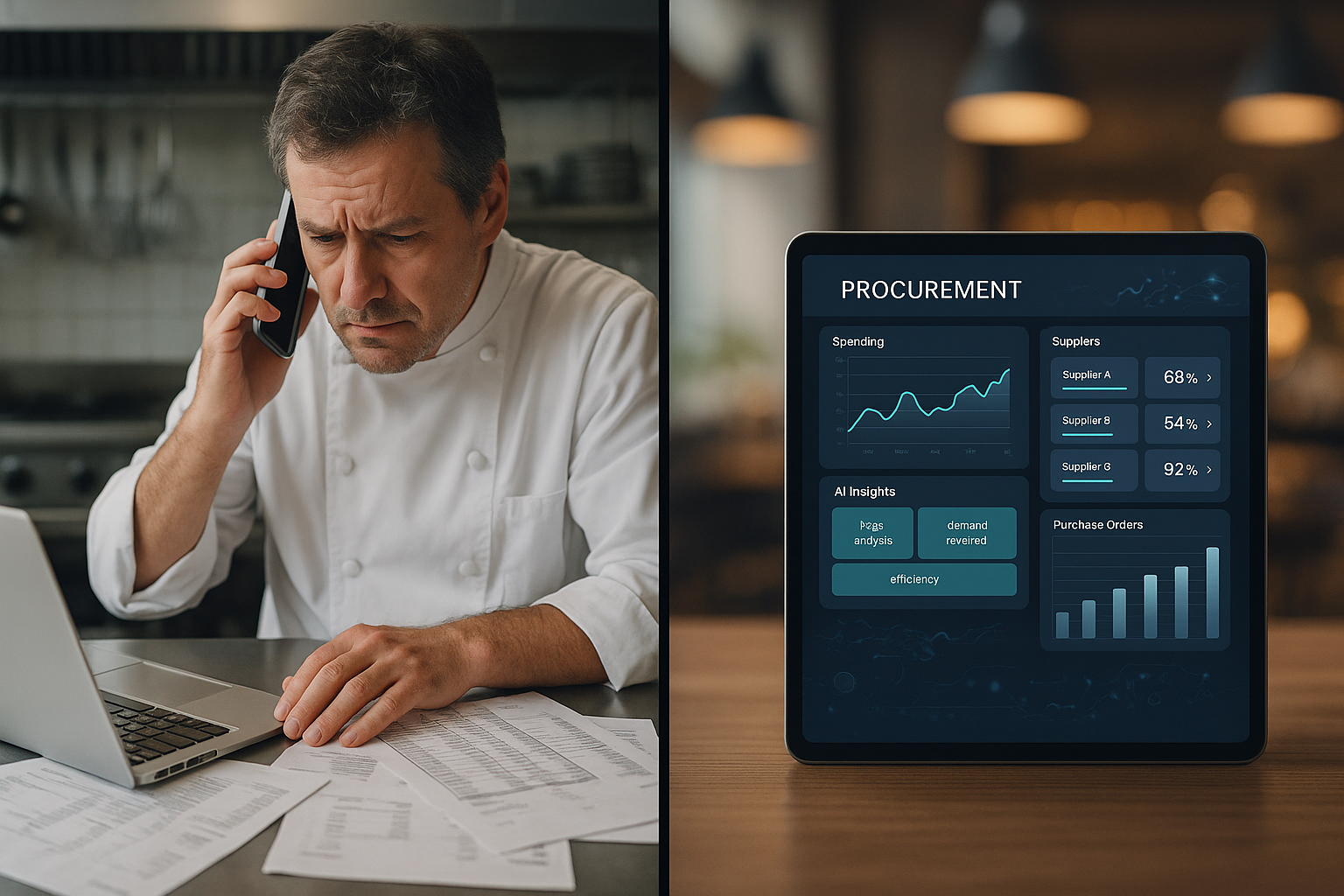
Walk into most hospitality operations and you'll find the same pattern. Spreadsheets tracking five different suppliers. Email chains negotiating prices. Phone calls chasing delayed orders. Manual invoice reconciliation eating hours every week.
It's not just inefficient. It's expensive.
While operators focus on creating memorable guest experiences, procurement systems quietly drain margins. Every manual process adds friction. Every scattered vendor relationship creates vulnerability. Every delayed order cascades into operational stress.
The industry knows this. That's why 72% of procurement leaders are now prioritizing AI integration into their strategies, according to a July 2024 Gartner survey of 258 global participants.
The Middle East Sees The Gap
Saudi Arabia is building 92,000 hotel rooms right now. The Kingdom aims to host 150 million visitors by 2030. Qatar's hospitality market is projected to grow 12% to reach $54.6 billion by 2030.
But here's the tension: you can build world-class properties faster than you can fix fragmented supply chains.
The Gulf nations understand infrastructure. They're investing billions in physical assets. Now the question becomes operational readiness. How do you staff, supply, and manage thousands of new hospitality venues without the systems to support them?
What AI Actually Solves
AI in procurement does three things exceptionally well.
First, it eliminates manual matching. Instead of searching for suppliers, the system recommends them based on your actual needs. Your menu triggers supplier options. Your concept generates equipment lists. Your location filters for relevant vendors.
Second, it aggregates transparency. Real-time pricing. Vendor reliability scores. Delivery performance data. All visible before you commit.
Third, it automates routine decisions. Reordering standard supplies. Processing invoices. Tracking spending patterns. The system handles what doesn't need human judgment, freeing operators to focus on what does.
The result? Faster launches. Clearer decisions. Measurable cost savings.
The Accessibility Question
Technology adoption in hospitality has historically favored enterprise operators. Large hotel groups can afford custom procurement systems. Independent operators make do with spreadsheets.
But the gap is closing.
AI-powered platforms can now deliver enterprise-grade functionality at accessible price points. Freemium models let new operators start without capital investment. Pay-as-you-grow structures scale with the business.
The barrier to entry drops when the tools become intuitive. When procurement feels less like financial engineering and more like using a well-designed app.
What Happens Next
The transformation is already underway. Procurement leaders are allocating budget. Technology providers are building solutions. Markets like the Middle East are creating demand at scale.
The restaurants that survive the next decade won't just cook better. They'll buy smarter. They'll launch faster. They'll operate with clarity instead of chaos.
The question isn't whether AI will transform hospitality procurement.
It's whether you'll adopt it before your competitors do.
Comments
Post a Comment